Inside Kyrenia Castle lies a merchant ship roughly 2,300 years old. Discover how it was found, what it carried, who sailed it and how to plan your visit.
The Kyrenia Castle Shipwreck Museum is home to one of the best-known finds in Mediterranean underwater archaeology: a small merchant ship that sank off Kyrenia roughly 2,300 years ago. Displayed inside the castle at the eastern end of the old harbour, the Kyrenia ship offers a rare window into the everyday lives of people who worked at sea in the ancient world. Here is the story of its discovery, its cargo and how to make the most of a visit.
A chance discovery by a sponge diver
The story begins in the mid-1960s. In 1965 Andreas Cariolou, a local diver and sponge fisherman, spotted a mound of amphorae on the seabed at a depth of around 30 metres, not far off the coast. Realising the importance of the site, he reported it, and within a few years a full excavation was under way.
The work was carried out in the late 1960s by an international team led by Michael Katzev on behalf of the University of Pennsylvania Museum. Divers recorded and raised the hull piece by piece, in what is regarded as one of the pioneering large-scale excavations in underwater archaeology.
When was it built, and when did it sink?
Researchers believe the ship was built in the second half of the 4th century BC and went down around 300 BC. The exact date was debated for decades; more recent analysis of wood samples and of almonds from the cargo places the sinking in the early 3rd century BC. In other words, the vessel had a long working life and had been repaired many times before it was lost.
The hull is about 14 metres long and built largely of pine. More than half of the original timber survived, which makes it one of the best-preserved ships of its era.
What was in the hold?
The cargo tells us a great deal about how trade worked in the ancient Mediterranean:
- Hundreds of amphorae: most are thought to come from Rhodes and probably carried wine and olive oil.
- Thousands of almonds: found remarkably well preserved inside jars, and later used to help date the wreck.
- Millstones: likely carried both as goods for sale and as ballast to keep the ship stable.
This mixed load suggests a small trading vessel that hopped from port to port, buying and selling as it went.
Life on board
One of the most moving parts of the museum is the collection of everyday objects belonging to the crew. Cooking pots, drinking cups, wooden spoons and oil jugs suggest a small crew, perhaps four people, who ate and drank together. Many lead net weights indicate that the sailors fished along the way. These small details turn the exhibit from a pile of timber into a human story.
Conservation and replicas
The raised timbers went through years of careful conservation and were reassembled inside the castle in the early 1970s. The hull you see today is the result of that painstaking work. To understand how the ship actually sailed, faithful replicas were later built; one, constructed in Greece in the 1980s, made long voyages at sea. These experiments have taught researchers a lot about ancient seafaring.
Planning your visit
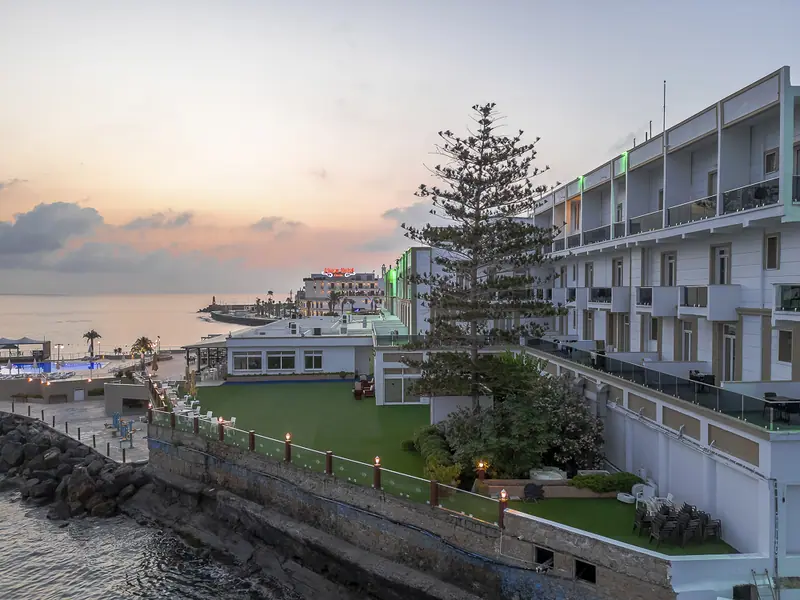
The museum is inside Kyrenia Castle, so you can combine it with the castle walls, the courtyard and wide views over the harbour. From the Dome Hotel on Kordonboyu it is a short, pleasant walk along the seafront to the castle. Mornings are cooler and quieter. Afterwards, stop for a coffee at the harbour and enjoy looking out over the same waters the ship once sailed.
If you are visiting with children, ask them to look for the almonds, the amphorae and the crew's spoons; the visit quickly becomes a small treasure hunt.
The Shipwreck Museum is inside Kyrenia Castle at the eastern end of the old harbour, a short walk from the hotel. Opening hours and admission may change, so check official sources before you go. Wear comfortable shoes and carry water in the warmer months.
On Kyrenia harbour since the 1930s. Best rate when you book direct.